Source china mainland jade necklace for gifts, decor, and collections
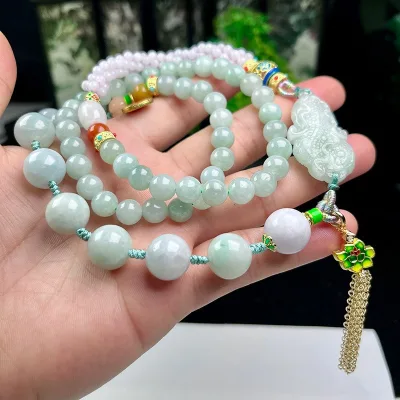
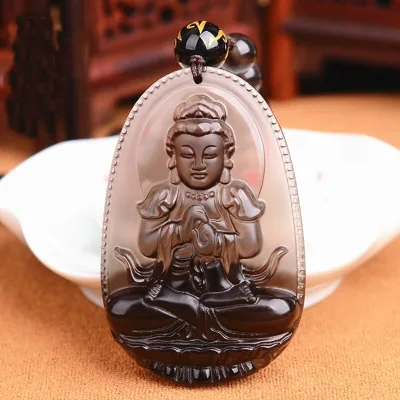
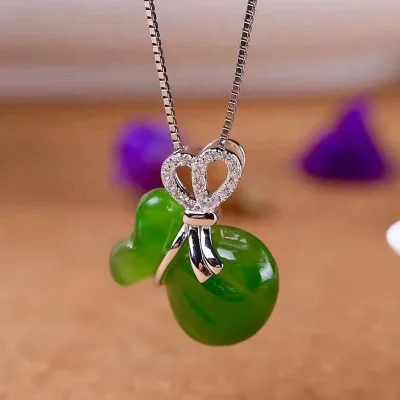
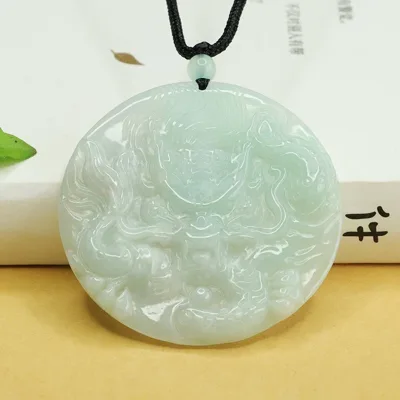
Compare 30 listings of china mainland jade necklace featuring various designs like Buddha and Pixiu. Buyers can review specifications, MOQs, and pricing to find suitable options for jewelry decoration and personal adornment.
Key considerations
Products List


Comprehensive Sourcing Guide
Strategic Sourcing Guide for China Mainland Jade Necklaces
Understanding Product Attributes and Technical Specifications
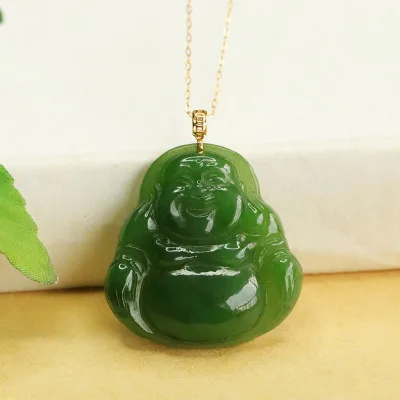
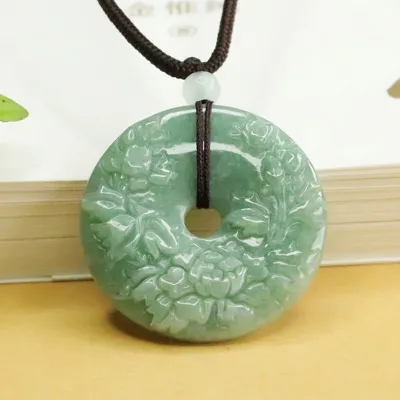
Sourcing jade necklaces from the China mainland requires a precise understanding of the specific attributes that define the product category. Based on current market observations, the core material is consistently identified as jade, with specific listings noting "100% Natural jade stone" and "Jade crystal" as primary compositions. The design landscape is diverse, ranging from traditional "Buddha" motifs to "Pixiu" and "Dragon" figures, alongside "Lucky Bag" pendants. These designs are not merely aesthetic choices but often carry significant cultural weight in the target markets.
Technical specifications vary significantly across different listings, necessitating a rigorous verification process before bulk ordering. For instance, physical dimensions observed in the market range from compact pendants measuring 47.52612mm to elongated pieces sized at 50*5mm. The weight of individual units also fluctuates, with observed single gross weights recorded at 0.100 kg and 0.300 kg. Packaging dimensions are equally critical for logistics planning; observed single package sizes include 10X5X10 cm and 10X5X5 cm. These variations indicate that buyers must treat each listing's specification sheet as a unique data point rather than a universal standard.
The manufacturing process plays a pivotal role in the final product quality. Common techniques observed include "Carved" detailing and "Channel setting" for inlay technology. While some listings describe the shape as "Other" or "same as picture," the "Luxury" and "Middle Eastern" style tags suggest a wide array of aesthetic directions. The gender classification is predominantly "Unisex," making these items versatile for various demographic segments. Buyers should note that while "Jade" is the main stone, the "Material Type" is sometimes listed as "Other," which may imply composite materials or specific treatments that require further clarification.
Compliance, Certification, and Origin Verification
When sourcing from the China mainland, verifying the place of origin is the first step in compliance. The primary production hub identified in the current market data is Tianjin, with broader origins listed as China. This geographic concentration can influence shipping logistics and supply chain resilience. However, the absence of specific certification data in the provided observations means that buyers cannot assume any product automatically meets international standards for natural jade or ethical sourcing.
Buyers must actively verify the authenticity of the "100% Natural jade stone" claims. The jade market is prone to treatments such as dyeing, bleaching, or polymer impregnation, which can significantly affect value and durability. Without explicit mention of third-party laboratory reports (such as those from GIA or NGTC) in the general product descriptions, the onus falls on the buyer to request these documents. The "OEM/ODM" and "Customized Logo Available" attributes indicate that many suppliers offer private labeling, but this does not inherently validate the material quality.
Regulatory compliance extends beyond material authenticity to include labeling standards. The "Gender: Unisex" and "Usage: Jewelry Decoration" tags are standard, but specific markets may have unique requirements for jewelry labeling, particularly regarding metal content if the jade is set in precious metals. Since the "Inlay technology" varies between "Channel setting" and "other," buyers must ensure that any metal components used in the setting comply with the destination country's regulations regarding lead, cadmium, and nickel content. The "Advantage: high quality" tag is a marketing claim rather than a verified compliance status and should be treated as a starting point for due diligence rather than a guarantee.
Cost Drivers and Pricing Dynamics
The pricing structure for jade necklaces in the China mainland market exhibits extreme volatility, with observed price ranges spanning from $0.22 to $8204.30 USD. This massive disparity is not indicative of a single product tier but rather reflects the vast differences in material quality, craftsmanship, and brand positioning. The lower end of the spectrum likely corresponds to smaller, mass-produced items or those with lower-grade jade, while the upper end represents high-quality, hand-carved pieces made from premium natural stones.
Several factors drive these cost variations. The primary driver is the material grade; "100% Natural jade stone" commands a premium over treated or synthetic alternatives. The complexity of the "Carved" technique also influences cost, as intricate designs like dragons or pixiu require more labor hours and skilled artisans. Additionally, the "Single gross weight" of 0.100 kg versus 0.300 kg directly impacts the raw material cost. The "Model Number" variations, such as XCJP487 and XCDZ-050, suggest that specific product lines may have distinct pricing strategies based on their intended market segment.
Minimum Order Quantity (MOQ) is another critical cost driver. The observed MOQ range is 1 to 3900 units, with specific listings showing an MOQ of 2 pieces or 2 pcs. This flexibility allows small buyers to test the market with minimal financial risk, while larger buyers can leverage economies of scale. However, the "Selling Units: Single item" designation indicates that some suppliers may not offer bulk discounts for very small orders, or they may price individual units higher to cover handling costs. Buyers must calculate the total landed cost, including shipping and duties, as the low unit price of $0.22 may not be viable once logistics are factored in for small order volumes.
Typical Applications and Market Segmentation
The applications for China mainland jade necklaces are diverse, catering to both personal adornment and gifting markets. The "Function: Pendant Necklaces" and "use area: Neck" attributes confirm their primary use as wearable jewelry. The "Design: Buddha" and "Jade Lucky Bag Pendant" designs are particularly popular in cultural gifting scenarios, where the symbolism of luck, prosperity, and protection is highly valued. These items are often purchased for festivals, weddings, or as traditional gifts for elders.
The "Style: Luxury" and "Style:: Middle Eastern" tags suggest that these products are also targeted at fashion-conscious consumers looking for statement pieces. The "Keyword: jade pendant" and "Jade Medallion" classifications indicate strong search intent in online marketplaces, making these items suitable for e-commerce retail. The "Unisex" gender classification expands the potential customer base, allowing retailers to market these necklaces to a broader audience without gender-specific segmentation.
In the B2B context, these necklaces serve as versatile inventory for jewelry boutiques, gift shops, and online marketplaces. The "OEM: Yes" and "Logo: can custom" features make them ideal for private label opportunities, where retailers can brand the products to match their own identity. The "Advantage: high quality" claim, while subjective, positions these items for the mid-to-high-end market segments where consumers are willing to pay a premium for perceived value and aesthetic appeal.
Supplier Evaluation and Due Diligence
Evaluating suppliers in the China mainland jade market requires a multi-faceted approach. The presence of "Brand Name" attributes like "XIANGCHUANG" and "XC" suggests that some suppliers operate under established brand identities, which can be a positive indicator of stability. However, the existence of generic model numbers and varying descriptions implies that many suppliers may be trading houses or manufacturers with limited brand recognition.
Buyers should prioritize suppliers who demonstrate transparency in their "Place of Origin" and "Material" claims. The ability to provide detailed "Single package size" and "Single gross weight" data indicates a level of operational maturity. Suppliers offering "OEM/ODM" services should be vetted for their capacity to handle custom designs and logo placement without compromising the integrity of the jade. The "Feature: Cool" and "Advantage: high quality" tags are marketing language and should be verified through physical samples or third-party audits.
It is crucial to assess the supplier's responsiveness to specific inquiries regarding the "Inlay technology" and "Technique: Carved" processes. A supplier who can clearly explain the differences between channel setting and other inlay methods, or who can provide images of the carving process, is likely more reliable. The "MOQ" flexibility is also a key indicator; suppliers willing to accept low MOQs like 2 pieces may be more suitable for initial testing, while those with higher MOQs may be better for established volume orders.
Quality Control and Long-Term Procurement Considerations
Implementing a robust quality control (QC) protocol is essential for sourcing jade necklaces. Given the natural variations in jade, visual inspection of samples is the first line of defense. Buyers should verify that the "Color: jade Necklace" and "Color: As pictures" match the actual product, as lighting conditions in photos can sometimes distort the true hue of the stone. The "Shape: same as picture" attribute requires physical verification to ensure the dimensions and proportions align with the product images.
For long-term procurement, consistency in "Material: Jade crystal" and "Material: 100% Natural jade stone" is paramount. Buyers should establish clear acceptance criteria for the "Technique: Carved" quality, ensuring that the craftsmanship remains consistent across batches. The "Single gross weight" should be monitored to ensure that the density and size of the jade do not vary significantly, which could indicate material substitution.
Long-term relationships with suppliers should be built on clear communication regarding "OEM" capabilities and "Logo: Customized Logo Available" requirements. Suppliers who can adapt to changing design trends, such as the shift from "Buddha" to "Dragon" motifs, will be more valuable partners. Additionally, buyers should consider the "Lead time" implications of custom orders, as intricate carvings may require longer production cycles. Establishing a framework for regular quality audits and sample approvals will help mitigate risks associated with the natural variability of jade and ensure a steady supply of high-quality necklaces for the market.
Comparative Analysis of Product Variants
To assist buyers in navigating the diverse offerings, the following table summarizes key observed product attributes and their implications for sourcing decisions.
| Attribute | Observation A | Observation B | Observation C | Sourcing Implication |
|---|---|---|---|---|
| Model Number | XCJP487 | XCDZ-050 | N/A | Indicates distinct product lines; verify compatibility with specific designs. |
| Material | Jade | Jade crystal | 100% Natural jade stone | "Natural" claims require verification; "crystal" may imply specific clarity. |
| Design | Buddha | Pixiu | Dragon | Cultural significance varies; align design with target demographic preferences. |
| Dimensions | 10X5X10 cm (pkg) | 47.52612mm (item) | 50*5mm (item) | Critical for packaging and shipping cost calculations; size affects perceived value. |
| Weight | 0.100 kg | 0.300 KG | N/A | Heavier items may command higher prices; verify weight consistency in bulk. |
| MOQ | 2 pcs | 2 | 2 pcs | Low MOQ allows for testing; high MOQ (up to 3900) suggests bulk manufacturing. |
| Origin | Tianjin | China | N/A | Tianjin is a specific hub; verify if all items originate from this location. |
| Technique | Channel setting | Carved | Other | "Carved" implies higher labor cost; "Channel setting" affects durability. |
| Customization | Logo: can custom | Logo: Customized | OEM: Yes | Essential for private label strategies; confirm lead times for custom work. |
This comparative view highlights the need for buyers to define their specific requirements before engaging with suppliers. The variation in model numbers, materials, and techniques underscores the importance of detailed specification sheets. By focusing on these key attributes, buyers can make informed decisions that align with their quality standards, budget constraints, and market strategies. The ultimate goal is to secure a supply chain that delivers consistent, high-quality jade necklaces that meet the expectations of the end consumer while maintaining operational efficiency.
FAQs
What is the typical MOQ for jade necklaces from Tianjin?
The typical minimum order quantity is 2 pieces for most listings. Some suppliers may accept orders as low as 1 unit, while others require up to 3900 units depending on the specific model and customization needs.
Which materials are commonly used for these jade necklaces?
Common materials include 100% natural jade stone and jade crystal. Some listings specify the material type as other, indicating potential composite materials or specific treatments that require further verification before purchase.
How do the dimensions of the pendants vary across listings?
Pendant dimensions vary significantly, ranging from compact sizes like 47.5 by 26 by 12 millimeters to elongated pieces sized at 50 by 5 millimeters. Buyers must verify specific measurements as they are not standardized across all products.
Can suppliers customize the logo on these jade necklaces?
Yes, many suppliers offer customized logo services and accept OEM orders. This allows buyers to brand the products, but the customization capability should be confirmed with the specific manufacturer to ensure design compatibility.
What is the price range for jade necklaces from China?
The observed price range spans from 0.22 to 8204.30 USD. This wide disparity reflects differences in material quality, craftsmanship complexity, and brand positioning rather than a single product tier.
Where are these jade necklaces primarily manufactured?
The primary place of origin is Tianjin, China. This geographic concentration influences shipping logistics and supply chain resilience, making it a key factor for buyers planning their import strategy.
Which design styles are available for these jade pendants?
Available designs include Buddha, Pixiu, Dragon, and Lucky Bag motifs. Styles also range from Luxury to Middle Eastern, catering to diverse cultural preferences and fashion trends in various global markets.